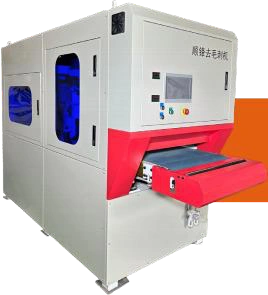
630 mm working width
Automatic Deburring Machine — SSD630IV, 630 mm
630 mm working width with belt-and-rounding units and listed Manual/Automatic control for a defined operator-managed work cell.
View Specifications
Reduce repetitive finishing work with a defined conveyor process, and choose the configuration around your loading, turning, inspection and job-change routine.
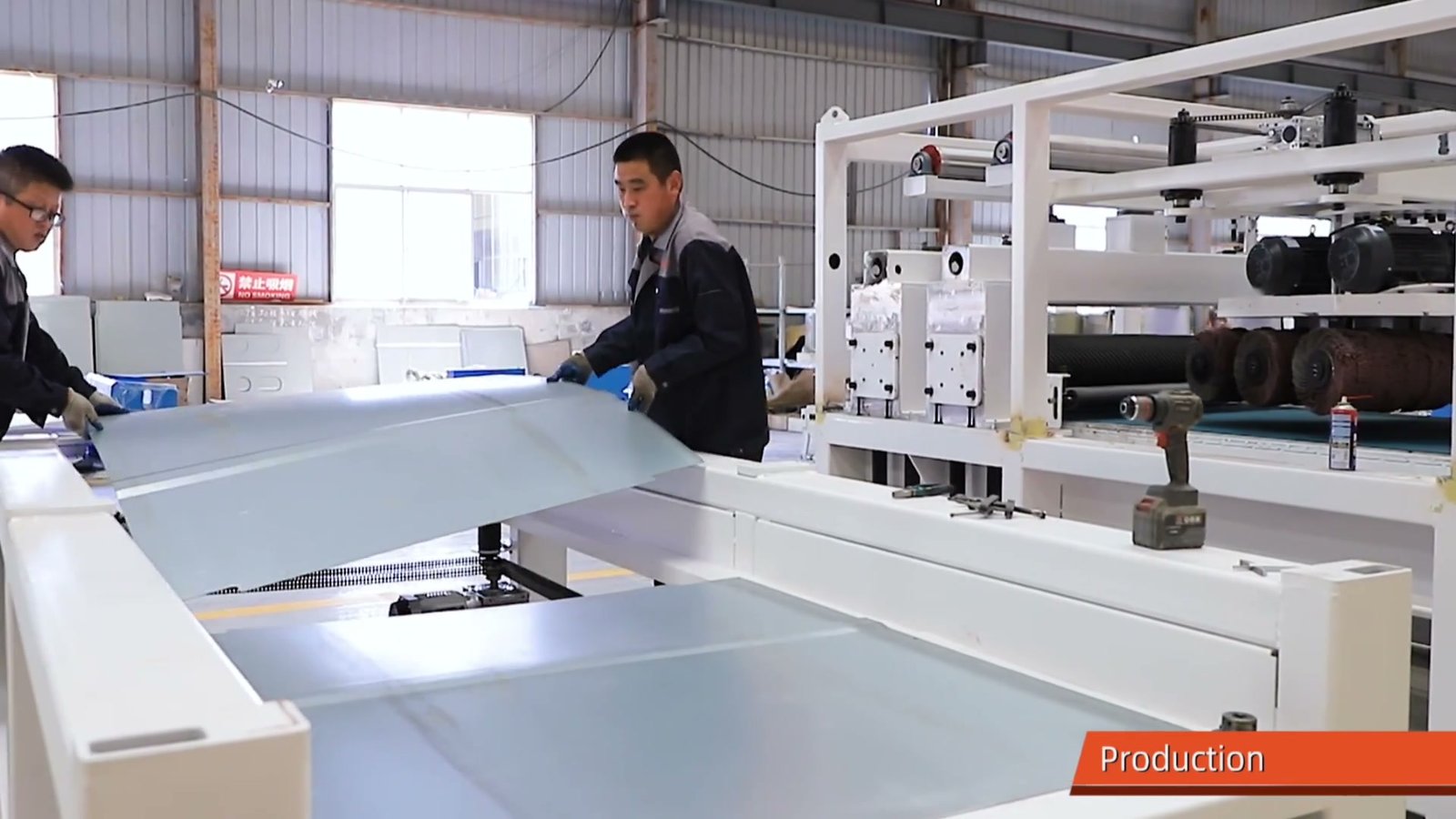
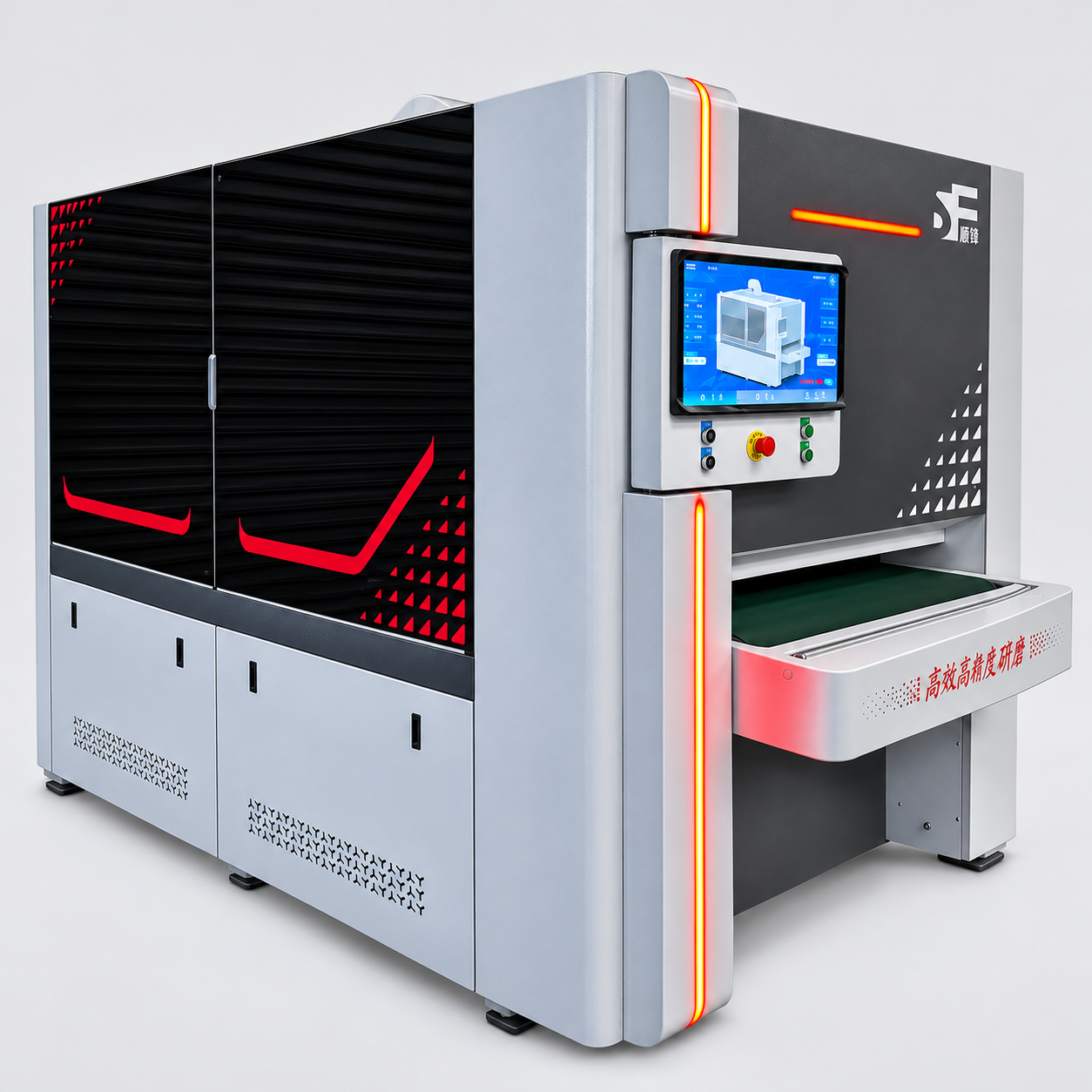
If parts wait for hand grinding while your cutting equipment keeps producing, the finishing cell can become the constraint. Shengteng supplies automatic deburring machine configurations around the work your operators need to complete. SSD630IV and SSD1000IV combine conveyor feeding with belt and rounding units; SSDL1300VIII also lists graining. We review your accepted output, part handling and job changes together, so you can compare the investment against the labor and waiting time in your actual production route.
If loading, turning or sorting occupies most of the cycle, faster abrasive processing may leave the same labor requirement. Time those tasks separately from the conveyor pass. Choose the processing configuration for the edge and finish, then define the handling work that remains. This makes the investment comparison useful for your normal part mix.
Discuss Your Parts with Us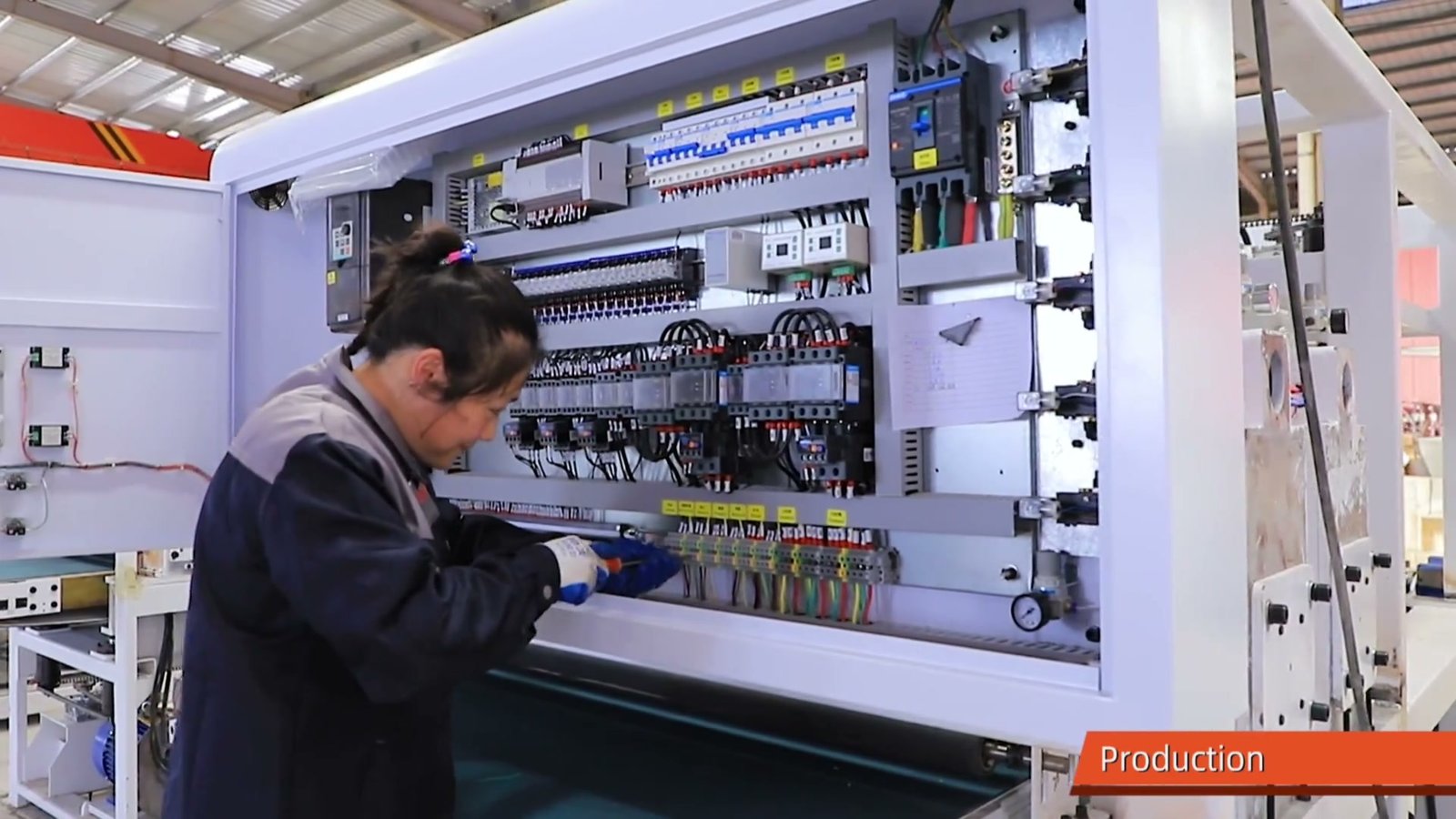
If your operator still turns, sorts and corrects every part, conveyor speed alone cannot justify the investment. Count the complete cycle and accepted output before deciding how much automation your workshop needs.
CUSTOMER FEEDBACK ON WORKING WITH SHENGTENGDiscuss Your Workpiece & Sample Requirements“After the equipment arrived on site, the parameters were adjusted to accommodate our workpieces, and both the deburring cycle time and edge consistency met our expectations. The price was within budget, and we were able to reach someone promptly for follow-up communication. Overall, it was satisfactory.”
Compare the working width and processing job, then open the model for its documented specifications.
630 mm working width with belt-and-rounding units and listed Manual/Automatic control for a defined operator-managed work cell.
View Specifications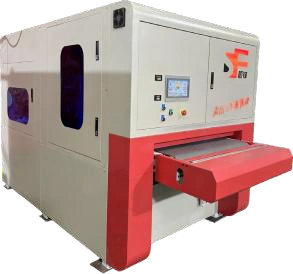
1000 mm working width and a 0.5–7 m/min conveyor range; compare complete-part output with your handling included.
View Specifications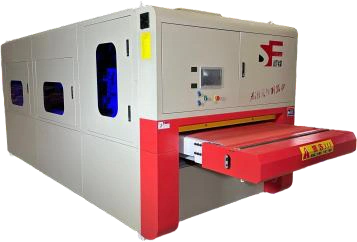
1300 mm working width combines belt, rounding and graining stages when your finished part needs a directional surface.
View Specifications| Model | Working Width | Thickness | Minimum Part* | Listed Units |
|---|---|---|---|---|
| SSD630IV | 630 mm | 1 mm-50 mm | 50 mm × 50 mm × 1 mm | Belt, Rounding |
| SSD1000IV | 1000 mm | 1 mm-50 mm | 50 mm × 50 mm × 1 mm | Belt, Rounding |
| SSDL1300VIII | 1300 mm | 1.5 mm-50 mm | Confirm minimum thickness | Belt, Rounding, Graining |
*Nominal catalog limits require a check of the actual part shape, support and ordered setup. Full model pages retain the source specifications and qualifications.
Specify who loads, maintains spacing and unloads the parts. Conveyor feeding and automatic control describe machine functions; they do not establish robotic handling.
If the part requires turning, count the handling and another pass in the cycle. Compare production output only after all required faces are finished.
Include batch changes and first-piece checks. A long run of identical panels can hide the setup effort that matters in mixed fabrication work.
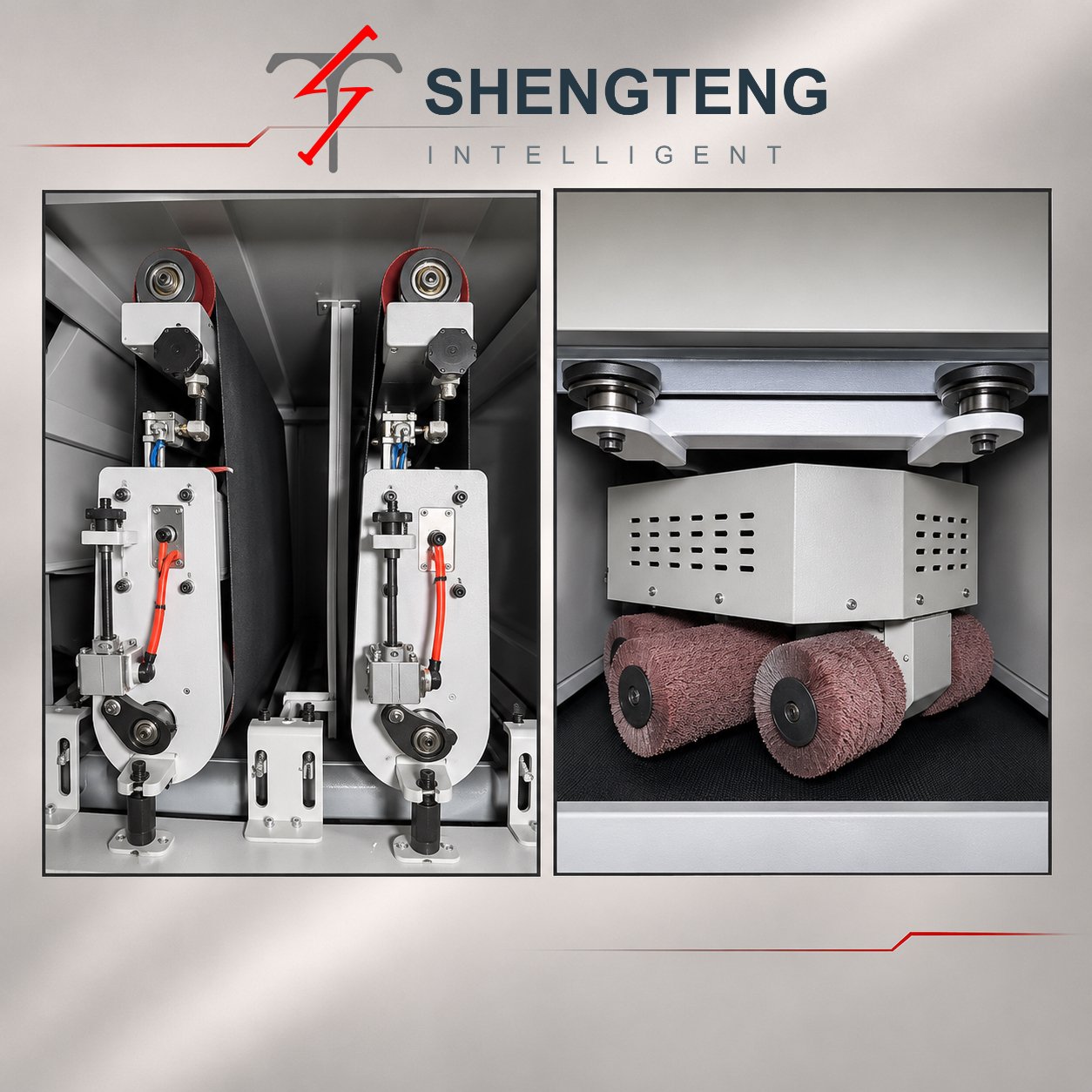
Your operators may still load, turn and inspect each part after the processing cycle is automated. Time those tasks with every required pass, then compare accepted pieces and operator involvement against your present route. The listed 0.5–7 m/min conveyor range gives you adjustment options; the useful buying evidence is the complete batch your team can finish at the agreed edge and appearance quality.
We assess the same burr and finish requirements through every needed pass. You can see the remaining handwork and reprocessing when comparing the proposed route with your current one.
Discuss Your Processing SetupQuestions about the result, the process and the setup you will actually use.
No. Conveyor feeding and Manual/Automatic control describe specific processing functions. Loading, unloading, turning and any robotic integration must be specified separately. Tell us which operator task you want to reduce, and the proposal can distinguish machine processing from the handling scope needed around it.
Output must be measured for your complete part route. Part length, spacing, turning, additional passes and inspection all affect pieces completed per hour. The listed conveyor range is an adjustment range, not a universal output figure. Compare a normal production run with the operator interventions and remaining manual touch-up included.
Do not assume mixed thicknesses can share one setting. Tool contact, support and the selected model determine the permissible setup. Separate part families may require a change and first-piece check. Describe the normal thickness mix early so job grouping and changeovers are included in the production proposal.
They are included only when the quotation lists them. Ask for the extraction arrangement, handling equipment, utilities, starter tooling and commissioning scope to be itemized. An automatic control entry does not establish those additions. Compare suppliers against the same equipment boundary so a lower machine price does not hide an installation task.
The guide shows how spacing, turning, inspection and job changes affect output and operator time. Use it to identify which step limits your production before adding machine capacity. Tell us the part family and the task you want to reduce so we can discuss the appropriate scope.
Begin with a simple work sequence. List who loads the part, which processing steps run inside the machine, whether the part must be turned and who checks and unloads it. For each task, identify the change you want the new equipment to make. This is more useful than starting with a general request for automation, because suppliers can otherwise describe very different systems using the same equipment name.
The reference automatic deburring machine configurations document conveyor feeding and Manual/Automatic control. Those entries are a basis for discussing machine functions, not evidence of robotic loading or a fully unattended line. We recommend agreeing the automation boundary before comparing offers. Your quotation, trial and shop-floor plan should all describe the same sequence, including the operator tasks and any handling equipment that must be supplied separately.
Observe a representative part family through the current finishing cell. Count accepted pieces and record operator time, waiting, manual touch-up and inspection. Include material movement between steps rather than timing only the moment when a tool touches the edge. If the main delay is sorting or handling rather than burr removal, a faster processing stage may not deliver the improvement you expect in the rest of production.
Use that record as the baseline for a trial. It lets you ask whether the proposed configuration removes time from the step that actually limits output. Our view is that automatic deburring should make the complete accepted route easier to run, not simply make one movement faster. Keep the same starting burr condition and final requirements in both measurements so the comparison does not reward an incomplete or easier process.
Automation does not remove the need to define the edge and face result. A belt stage, an edge-rounding unit and a graining stage address different tasks. If your requirement is only to remove a raised burr, assess that task first. If the remaining edge must also be softened or the visible face needs a deliberate grain, include those requirements and the corresponding inspection points in the proposed route.
Compare the work that remains after the part exits. Some parts need the opposite side processed, while some contain features outside the useful contact of the chosen tools. Mark those exceptions before the demonstration and record their manual finishing time. A combined machine may reduce movement between operations, but you still need to verify the final part. The number of included units is less useful than knowing which requirement each one actually meets.
The conveyor speed listed in the manual is an adjustment range. Your accepted output also depends on part length, spacing, feed orientation, loading consistency and the number of passes. A setting at the top of that range is therefore not a production promise. Ask to run the sample batch in the same pattern you plan to use, with the required finish rather than the fastest movement as the endpoint.
Time the complete run from the first normal loading action to the last accepted part. Include reloading and turning where needed, and record stops or interventions. If more than one operator is involved, record that as well. We recommend keeping both accepted parts per hour and operator time per accepted part. These measures show whether the configuration improves capacity, labor use or both, without hiding the work outside the machine.
A demonstration on one unchanging part is useful for checking the process, but it says little about a mixed-job workshop. Bring a second normal family that changes thickness, geometry or appearance requirements. Ask which settings, abrasives and checks change between them. Observe the transition and the first-piece approval rather than assuming that an operator can move directly from one batch to another with the same setup.
For comparison, record the changeover method and time alongside the run result. A configuration that performs well on long repeats may need a different production plan when jobs are short and varied. Grouping compatible families can be part of the solution, but that grouping should suit your schedule. Do not calculate the investment only from a continuous run if your normal day contains frequent setup changes and small batches.
Review the physical space around the machine and the way operators will handle the longest, widest and least stable parts. A suitable working width does not settle incoming stacks, part turning, outgoing support or the distance to the next operation. If your plan includes several parts across the conveyor, test the intended presentation rather than assuming that all available width can always be used productively.
Also review how parts are identified and kept in order when batches differ. A simple, repeatable loading method can be more valuable than an ambitious pattern that requires constant intervention. Where extra handling or integration is proposed, state exactly what it includes and how it will be demonstrated. Shengteng can then discuss the core processing configuration against a practical work cell instead of a theoretical maximum flow through an isolated machine.
Record the accepted abrasive specification, feed orientation and processing settings for each normal family. Include the inspection points that tell an operator whether the setup is still producing the intended result. The handover should explain how to check a new abrasive, what to inspect after a thickness change and which maintenance tasks support reliable operation. A setting number alone is not a substitute for the accepted sample and its inspection notes.
During the trial, inspect pieces from the beginning, middle and end of the run. If burr attachment or incoming material varies, include that normal variation in the sample set. We recommend reviewing the causes of rework with the operator sequence still visible. This helps you distinguish a processing issue from an orientation, handling or inspection issue and gives your team clearer actions when production conditions change.
Calculate the current cost of finishing an accepted part using the operator time, consumables, rejects and follow-up work you actually observe. Compare it with the same complete cost during the trial and include realistic changeover frequency. For equipment costs, use the confirmed machine, auxiliary, installation and handling scope. Keep assumptions visible so the comparison can be adjusted when your production mix or shifts change.
Prepare your inquiry with the part drawings, burr photographs, output baseline and desired automation boundary. Add the available floor plan and the next production operation. This allows the proposal to address a measurable task rather than a broad promise of efficiency. The strongest automatic deburring selection is a process your team can repeat at the required quality, with a clear account of the labor and time it saves in your workshop.
Share the material, size range, burr photographs and the finish you need. We will review the configuration with you before preparing your quotation.