Part review
Share the drawing, material grade, dimensions, cutting method and burr photographs. Identify the faces and edges to be processed.

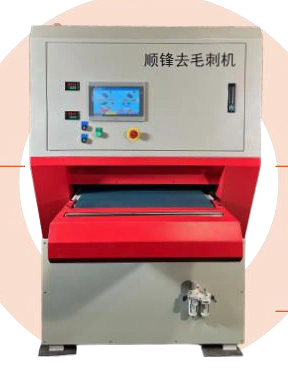 Model view from the supplier manual
SS630 is a 630 mm belt deburring option for raised burrs that keep your parts returning to the bench. The catalog lists 1–50 mm processing thickness. Its 2 listed belt-drive motors provide a configuration to assess for removal and refinement. Choose around the face change your next operation accepts, allowing handling space beyond the 1913 × 1121 mm machine footprint.
Compare the documented units with your part, edge condition, and required finish.
Compare the same configuration ↗“Not listed” records the contents of the manual, not a confirmation that an option is unavailable. Part suitability and optional equipment are confirmed for the selected configuration.
Values transcribed from the corresponding supplier catalog page. Confirm the ordered configuration and applicable workpiece range before purchase.
| Processing width | 10 mm-630 mm |
|---|---|
| Processing thickness | 1 mm-50 mm |
| Minimum processing size | 50 mm × 50 mm × 1 mm |
| Abrasive Belt Main Motor*2 | 2x5.5 kW |
| Conveyor Motor*1 | 2.2 kW |
| Platform Lifting Motor*1 | 0.37 kW |
| Total Power | 13.57 kW |
| Pulse Dust Collector | 5 kW (optional ) |
| Abrasive Belt Speed | 1450 r/min |
| Conveyor Speed (Frequency Adjustable) | 0.5-7 m/min |
| Adjustment accuracy | 0.02 mm |
| Working pressure | 0.6 MPa |
| Control mode | Manual / Automatic |
| Weight | ≈ 1240 kg |
| Equipment dimensions | 1913 mm × 1121 mm × 2129 mm |
| Abrasive belt dimensions | 640 mm × 1640 mm |
| Conveyor Belt Size | 630 mm × 3230 mm × 7 mm |
| Main Bearing Model | PA206,FU207 |
Adjusting accuracy is a machine-setting parameter. It is not a guaranteed finished-part tolerance or edge radius. Optional extraction and auxiliary units follow the confirmed supply scope.
Shortlist SS630 when your feed envelope fits 630 mm; review SS1000 for 1000 mm work, allowing for its handling space and thickness range.
| Compare the configuration | SS630 | SS1000 |
|---|---|---|
| Working width | 630 mm | 1000 mm |
| Processing thickness | 1–50 mm | 1–50 mm |
| Listed processing units | 2 listed belt-drive motors | 2 listed belt-drive motors |
| Machine footprint, length × width | 1913 × 1121 mm | 2533 × 1700 mm |
Share the drawing, material grade, dimensions, cutting method and burr photographs. Identify the faces and edges to be processed.
Compare documented processing units and the working range. Identify the abrasives, support and auxiliary items that require confirmation.
Agree the trial sample, incoming condition and inspection method. Record the setup and the finished edge and surface.
Confirm the selected model, tool sequence, supply scope and acceptance criteria in writing before placing the order.
Request the agreed checks and records for the ordered configuration. Review packing, manuals and destination requirements with SHENGTENG.
Confirm utilities, handling space, extraction interfaces and the available commissioning support for the agreed installation.
Review SS630 when your part fits 630 mm working width and the main job is removing raised material from the presented face. Its 2 listed belt-drive motors provide a configuration to assess for separate removal and refinement tasks. A belt result does not establish a rounded hole edge. Keep your locating features and cosmetic-face limit in the same trial, and assess a rounding configuration if the remaining contour also needs treatment.
Shortlist SS630 when your feed envelope fits 630 mm; review SS1000 for 1000 mm work, allowing for its handling space and thickness range. Their listed machine footprints are 1913 × 1121 mm and 2533 × 1700 mm, respectively. Include the loading pattern, accessible contours and any manual follow-up in your sample comparison.
The SS630 catalog lists abrasive belts of 640 mm × 1640 mm. Use that model-specific size when discussing replacements, then agree grain, grit, backing and joint specification against your material and burr. A correctly sized belt can still change removal or scratches if its abrasive specification differs. Record the accepted belt with your operating setup so a replacement is checked against the same fitting features and visible-face limit.
Start with SS630's listed machine footprint of 1913 × 1121 mm, then add the loading and unloading space required by your longest part. This footprint is the machine body's length and width, not a complete installation envelope. Review the service access, material route and extraction connections in the proposed layout. A part that fits 630 mm working width still needs practical support and room to move through the entire cell.
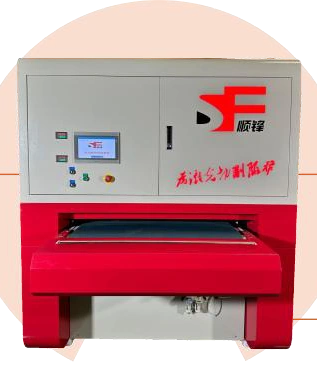
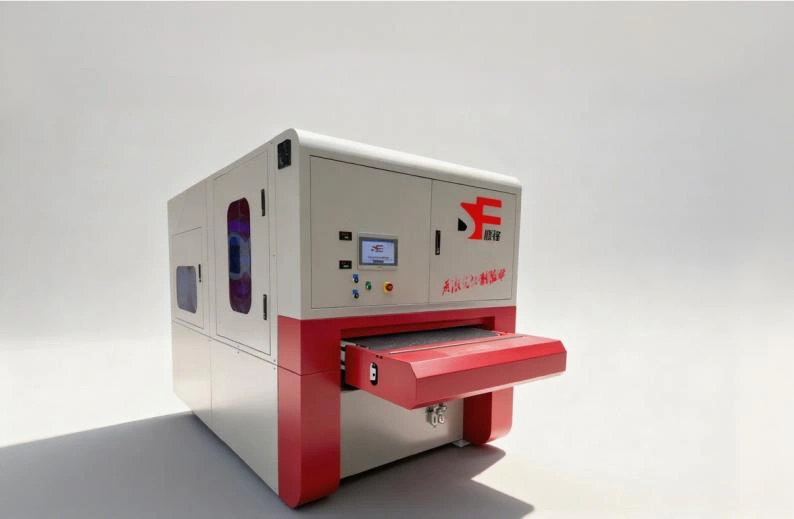
Send the details that matter for a burr removal machine: material, dimensions, burr condition, and the required finish.